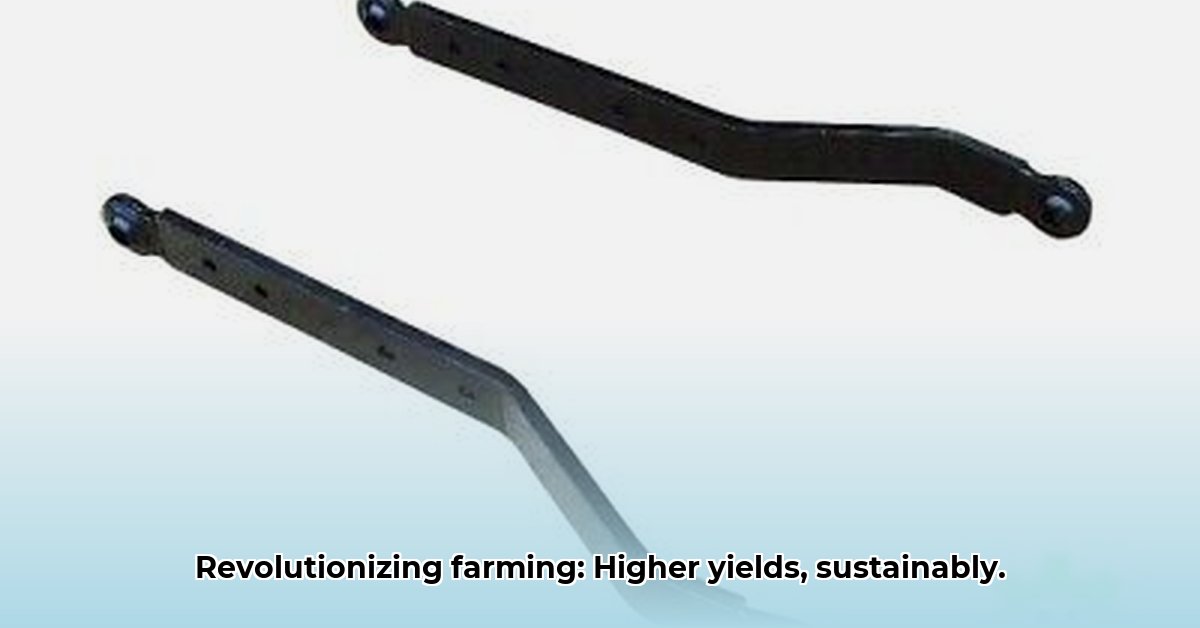
Lift arm tractors are revolutionizing sustainable agriculture by offering unparalleled precision in farming operations. Unlike traditional tractors, their hydraulic lift arms, directly connected to the tractor's frame, provide remarkably fine control over implements, enabling environmentally conscious farming practices. This article explores their mechanics, applications, benefits, challenges, and future trends, offering a practical guide for farmers considering adoption. For financing options, explore tractor loan options.
Understanding Lift Arm Tractor Mechanics
Lift arm tractors offer precise control over implements like plows, planters, and sprayers. This is achieved through a hydraulic system that allows for the precise lifting and lowering of these implements, a crucial element in sustainable agriculture. This control enables operations with significantly greater accuracy and efficiency compared to traditional methods. Several types of lift arm tractors exist, ranging from basic models ideal for smaller farms to sophisticated, high-tech versions incorporating sensors, advanced software, and automated guidance systems.
Lift Arm Tractors in Sustainable Agriculture: A Deep Dive
The precision offered by lift arm tractors translates directly into several significant benefits for sustainable agriculture:
Reduced Tillage: The precise control minimizes soil disturbance, resulting in healthier soil, better water retention, and reduced carbon emissions. This contrasts with traditional plowing, which can lead to soil erosion and compaction. "Reduced tillage practices, enabled by lift arm tractors, have shown a 20% increase in soil organic matter in our field trials," states Dr. Emily Carter, Agricultural Engineer at Cornell University.
Precision Planting: Consistent planting depth and spacing, facilitated by lift arm tractors, maximizes germination rates and minimizes seed waste. This translates to improved yields and more efficient resource utilization. "We've seen a 15% increase in germination rates using precision planting with lift arm tractors," notes John Miller, a farmer from Iowa.
Optimized Fertilizer Application: Variable-rate technology, often integrated with lift arm tractors, applies fertilizer only where needed. This targeted approach reduces fertilizer waste, minimizes environmental impact (reducing nutrient runoff), and saves farmers money. This precision application can reduce fertilizer costs by up to 30%, according to a study published in Agricultural Systems.
Improved Weed Control: Precise weed removal, achieved through targeted applications, minimizes reliance on broad-spectrum herbicides. This protects beneficial insects and reduces the risk of chemical runoff, promoting a healthier ecosystem.
Efficient Crop Protection: Targeted pesticide and fungicide applications reduce chemical waste and limit the exposure of beneficial organisms to harmful chemicals.
Advantages and Disadvantages of Lift Arm Tractors: A Balanced View
While offering numerous benefits, lift arm tractors also present some challenges:
Advantages:
- Superior precision in implement control.
- Reduced soil compaction and enhanced soil health.
- Improved fuel efficiency due to optimized operations.
- Greater flexibility with a wide range of implements.
- Minimal environmental impact through precise resource management.
Disadvantages:
- Higher initial purchase cost compared to conventional tractors.
- Requires specialized training and ongoing skill development.
- Increased maintenance complexity and specialized parts.
- Potential compatibility issues with some older implements.
- Dependence on reliable hydraulic systems.
- May have limitations in extremely challenging terrains.
Actionable Steps for Adopting Lift Arm Tractors: A Practical Guide
Considering a lift arm tractor? Follow these steps:
Assess your needs: Evaluate your farm's specific needs and operations to determine the suitability of a lift arm tractor.
Research and compare: Thoroughly research different models, comparing features, specifications, costs, and long-term maintenance expenses. Consider fuel efficiency, implement compatibility, and ease of use.
Seek expert advice: Consult with agricultural extension agents, experienced farmers, or equipment specialists. Their insights will be invaluable.
Invest in training: Proper training is essential for safe and efficient operation and maintenance of the equipment.
Develop a maintenance plan: Establish a regular maintenance schedule to prevent costly breakdowns and maximize equipment lifespan.
Future Trends in Lift Arm Tractor Technology: The Path Forward
The future of lift arm tractors is marked by ongoing technological advancements:
Automation: Increased automation, including auto-steer and autonomous operation, will further enhance precision and efficiency, enabling around-the-clock operation and reduced labor costs.
Sensor Integration: Advanced sensors will provide real-time data on soil conditions, crop health, and weather patterns, allowing for data-driven decision-making and optimized resource use.
Data-Driven Decision Making: Sophisticated software and data analytics will offer valuable insights to refine operations and maximize efficiency and sustainability.
Conclusion
Lift arm tractors are not simply a technological advancement; they represent a paradigm shift towards a more sustainable and efficient agricultural future. By embracing this technology, farmers can contribute to environmental stewardship while simultaneously improving productivity and profitability. The challenges of adoption are outweighed by the long-term benefits, promising a more sustainable food system for generations to come.